Best Online Casinos in United States: A Complete List (2026)
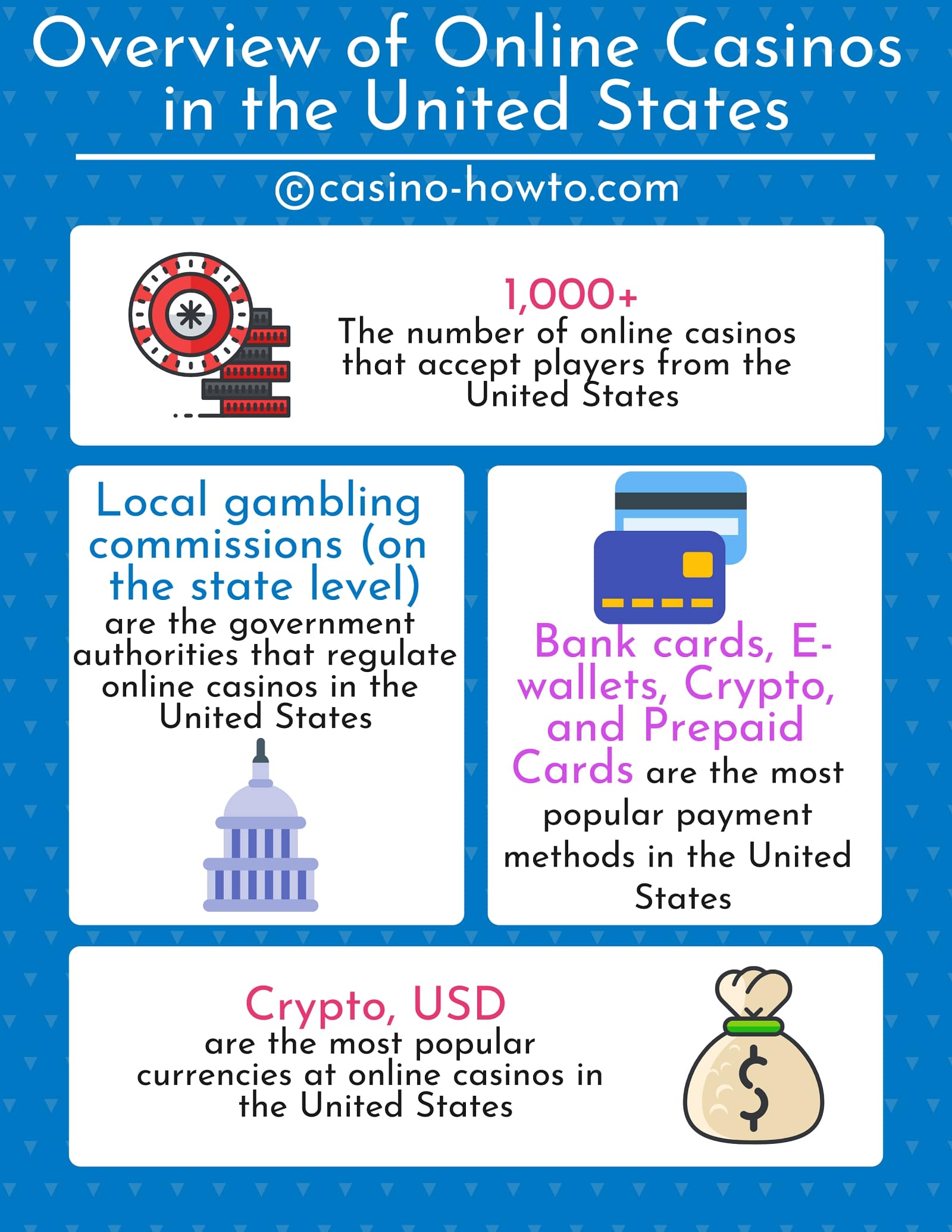
The United States online casino market is large, but legal access depends heavily on where a player is physically located. There is no federal licence that lets one casino legally take real-money wagers across all 50 states. Instead, individual states decide whether to permit online casino games and each regulated state has its own licensing authority.
As of August 2026, real-money online casinos are live in seven states: Connecticut, Delaware, Michigan, New Jersey, Pennsylvania, Rhode Island and West Virginia. Maine has also legalised online casino gaming, but its market is still going through rulemaking and has not launched yet. (americangaming.org) (maine.gov)
That limited state coverage is the first thing I would keep in mind when comparing US casinos. A legal casino app can work perfectly in New Jersey and stop accepting wagers once the same player crosses into New York.
I think the regulated state markets are the sensible place to look. They provide state oversight, tested software, identity checks, responsible-gambling controls and a regulator players can contact if something goes badly wrong.
Best Online Casinos in United States










+ 2 more


+ 1 more

+ 3 more

+ 1 more

+ 3 more
How I Choose The Best United States Online Casinos
Choosing a US online casino starts with location rather than the welcome offer. Before I look at games or bonuses, I want to know whether that exact operator is licensed in the state where the player will actually place wagers.
This is especially important because offshore casinos can look similar to regulated US sites. An American flag, USD account and English-language support are not evidence of a US gambling licence.
These are the main points I use when assessing US online casinos:
The casino must legally accept players in the state. I check the state regulator's authorised operator list rather than treating “US accepted” as enough. A casino legal in Michigan may have no permission to operate in another state.
The player must be physically inside the legal state. Residence alone is not enough. Regulated online casino systems use geolocation technology to confirm the player's physical location when wagers are placed. Connecticut law, for example, expressly requires online casino customers to be physically present in the state. (cga.ct.gov)
A valid state licence comes first. There is no general “USA casino licence.” New Jersey, Pennsylvania, Michigan and the other iCasino states regulate operators through their own agencies.
I check the exact casino domain and app. Scam sites can borrow the name, logo or visual style of a legitimate operator. The website or application needs to match what the regulator has authorised.
USD accounts should be standard. A legal US casino asking domestic players to manage their normal account balance primarily in another currency would make little sense to me.
Payment methods should suit US banking. ACH, debit cards, online banking and recognised digital wallets are much more useful than obscure offshore processors.
Withdrawal speed matters more than deposit speed. Casino deposits are normally quick. What separates good operators is how cleanly they process a verified withdrawal.
Cashout conditions need to be visible. I check minimum withdrawals, pending periods and method-specific restrictions before placing much value on a casino.
Reputation still matters after licensing. A state licence is an excellent first filter, but it does not mean every support team or cashier performs equally well.
The game selection should have depth. I want a mix of slots, RNG table games, live dealer products and less common casino formats rather than a lobby padded with hundreds of near-identical releases.
Software must be approved for the regulated market. Legal operators use games and systems that have gone through state approval and testing requirements. That is a much stronger basis for trusting an RNG than a logo on an offshore casino page.
Account security should be strong. Encryption is the minimum. I also prefer multi-factor authentication, login alerts and clear account-recovery procedures.
Customer support needs to solve payment problems. I pay more attention to an operator's response to a KYC or withdrawal question than how quickly a live-chat window opens.
KYC should be predictable. State-regulated casinos verify identity, age and other account information. I think players benefit when the process is explained before they have a withdrawal waiting.
Bonuses must have understandable rules. A high bonus value means little when the player misunderstands wagering, game restrictions or expiration.
Promotions for regular players matter too. Cashback-style offers, loyalty systems, tournaments and recurring casino rewards can be more useful over a year than a one-time welcome bonus.
Responsible-gambling controls are part of the rating. US regulated markets provide exclusion systems and account controls. Pennsylvania allows voluntary exclusion from internet-based gambling, while Michigan's Responsible Gaming Database can exclude a player from all regulated online gaming and internet sports betting in that state. (pa.gov) (michigan.gov)
I look at complaint options. A regulated operator has a state authority above it. That gives players somewhere to take serious unresolved issues.
I check whether the casino clearly separates casino and sportsbook products. A state can legalise sports betting without legalising online slots and table games. This catches out plenty of people because legal mobile sportsbooks are available in far more states than online casinos.
The last point deserves extra attention. Sports betting legality tells you almost nothing about whether online casino games are legal in the same state.
The legal US iCasino market is still concentrated in a small group of jurisdictions. The American Gaming Association reported seven states with lawful, live online casino markets in 2025, generating $10.73 billion in iGaming revenue during that year. (americangaming.org)
Maine makes the 2026 picture slightly more complicated. The state has legalised iGaming under a tribal model, but rulemaking was still underway during summer 2026, so I would not count Maine as a live casino market yet. (maine.gov)
For me, the safest rule is simple: check the regulator in the state where you are physically playing. If the casino is not on that authorised list, a huge game library or generous bonus does not fix the problem.
United States Casino Bonuses Vary By State
US online casino promotions can be quite competitive because licensed operators are fighting for customers inside relatively small state markets. The exact offer can vary by both casino and state, so I would not assume that a promotion seen in Pennsylvania is identical in Michigan.
New-customer promotions can use several formats:
Deposit-match bonuses: The operator adds promotional funds based on part of the qualifying deposit.
Bonus credit: Some casinos provide fixed promotional casino credit after qualifying activity.
Free spins: These can be attached to selected online slot games.
Loss-back or casino insurance offers: Certain promotions return promotional credit based on qualifying losses during an initial period.
Reload promotions: Existing players may receive extra promotional value on a later deposit.
Loyalty programmes: Casino activity can earn points or status that may be shared with the operator's land-based rewards programme.
Daily promotions: Some casino apps rotate short offers around selected games.
Tournaments and leaderboards: Eligible game activity can generate points towards a prize pool.
I always read the actual promotion terms. US-regulated casinos usually present much clearer conditions than anonymous offshore sites, but that does not mean every offer is good value.
Expiry is one detail people overlook. Promotional credit can disappear if it is not used within the specified period.
I also check whether the reward is withdrawable cash or promotional casino credit. They are not the same thing, even when the dollar figure shown in the advert looks identical.
State rules also affect how promotions are presented. Connecticut, for example, prohibits misleading gaming advertising and bars operators from directly targeting people who have self-excluded. (cga.ct.gov)
Deposit Methods At US Online Casinos
Legal US casino apps generally offer a stronger selection of mainstream payment methods than offshore sites because they work with regulated domestic banking and payment providers.
Availability still varies by state, operator and bank.
Common options include:
ACH or eCheck: This links a bank account directly to the casino. I like ACH because it normally provides a clear transaction trail and can support both deposits and withdrawals.
Visa debit cards: Debit cards are familiar and deposits are normally quick. Some banks may still decline gambling transactions even when the casino itself is legal.
Mastercard debit cards: These work much like Visa cards, with approval depending partly on the issuing bank.
PayPal: Several regulated US casino operators support PayPal where permitted. It can be useful because deposits and withdrawals can pass through an established wallet rather than requiring separate banking details each time.
Online banking: Direct bank-login payment systems let players transfer money without manually entering account and routing numbers.
Play+ or similar prepaid gaming accounts: These create a dedicated payment account for gambling transactions and are used by several large regulated operators.
Apple Pay: Some casino apps offer Apple Pay where the player's underlying card and state support it.
Cash funding: Certain operators tied to land casinos can allow account funding or withdrawals through casino cages or retail payment networks.
Current regulated operators advertise combinations of ACH, debit cards, PayPal, Apple Pay, online banking and prepaid gaming accounts, although no single method works everywhere. (betmgm.com)
I would not keep trying different cards when a bank declines a gambling transaction. Calling the issuer or choosing another permitted cashier method is cleaner than attempting to disguise what the payment is for.
Withdrawals are where I make the real comparison. ACH and PayPal can be useful because they give the operator an established route for sending verified winnings back to the customer.
Real-Money Casino Games Popular In The United States
The regulated US online casino lobby has its own feel. Many games are closely connected to the slot and table products players already recognise from Atlantic City, Detroit and other land-based casino markets.
These are some formats I would look for:
Online craps: Digital craps is much easier to follow on-screen than a crowded physical table for some players. The pass line and don't pass line remain the bets I would examine before the long list of higher-edge proposition wagers.
Live dealer craps: This combines physical dice equipment and studio dealers with online betting controls. It is still less common than live blackjack or roulette, which makes a strong craps studio a useful point of difference.
Double Double Bonus Poker: This video poker variant places extra value on certain four-of-a-kind hands. The trade-off is a different paytable from standard Jacks or Better, so I always check the exact return.
Jacks or Better: It may look old beside modern video slots, but decisions actually matter. The paytable is critical because visually identical versions can return different percentages.
Slingo: This combines slot mechanics with bingo-style number matching. It has become a recognisable part of several regulated online casino libraries.
Wheel of Fortune-style slots: Branded slots built around familiar US casino themes remain common, particularly where online operators work with the same suppliers seen on physical casino floors.
Live dealer Ultimate Texas Hold'em: Players compete against the dealer rather than one another, with decisions around when to raise. It offers more involvement than a pure chance-based wheel game.
Buffalo-style slots: Buffalo themes have been popular in US land casinos for years, and online versions carry that familiarity into legal casino apps.
Instant-win games: Short RNG games provide very quick rounds and simple rules. I would watch session length closely because fast wagering can make spending harder to notice.
I think video poker deserves more attention than it usually gets in online casino rankings. Unlike a normal slot, the decisions made after the initial deal affect the final mathematical return.
Game availability can still differ from state to state even when the operator brand is the same. Each regulator approves products for its own market, so I would check the actual state-specific lobby rather than relying on screenshots from another jurisdiction.
How Online Casino Law Works In The United States
There is no single answer to whether online casinos are legal in the United States. Casino gambling is largely regulated at state level.
As of August 2026, legal real-money online casinos are live in Connecticut, Delaware, Michigan, New Jersey, Pennsylvania, Rhode Island and West Virginia. Maine has legalised online casino gaming but is still working through implementation and rulemaking. (americangaming.org) (maine.gov)
The standard minimum age for regulated US online casino play is 21. Connecticut law, for example, requires players to be 21 and physically present in the state before placing online casino wagers. (cga.ct.gov)
Other states can have completely different rules because online casino legislation is not national. Nevada is the classic example: it has a huge land casino industry and regulated online poker, yet it does not have ordinary state-wide real-money online slots and table casino apps.
Self-exclusion is also organised state by state rather than through one national casino register. Pennsylvania and Michigan both maintain systems covering regulated internet gambling. (pa.gov) (michigan.gov)
Federal tax is another issue players cannot ignore. Gambling winnings are taxable income, and state income taxes can apply on top depending on where the player lives and gambles.
There is a major 2026 change here: beginning with the 2026 tax year, the federal deduction for gambling losses is limited to 90% of gambling losses and still cannot exceed gambling winnings. (irs.gov)
Crypto Online Casinos In The United States
Crypto casino websites are easy to find online, but I would separate them completely from the regulated US iCasino market.
Bitcoin support does not make a casino legal in a particular state. If an operator lacks the required state gaming licence, accepting BTC or USDT does nothing to fix that.
The regulated casino apps I prefer are built around approved payment systems and identifiable player accounts. Crypto-only offshore sites can lack the state complaint procedures and consumer protections that legal US operators provide.
Crypto also adds price movement to the gambling result. A casino balance can rise while the underlying token drops against the dollar.
For a US player, I think checking the state licence is much more useful than checking whether the cashier displays a Bitcoin logo.
Mobile Casino Apps In The United States
US regulated online casino gaming is built around mobile use. All casinos I would include in a state-specific rating need solid Android and iPhone support.
The unusual part is geolocation. Casino apps need to establish that the player is physically inside a state where that operator is authorised to take the wager.
Connecticut's statutory system, for example, requires electronic wagering platforms to verify both age and physical presence inside the state. (cga.ct.gov)
That means an app can open normally while refusing the actual bet if the location check fails.
I would allow location permissions and use the operator's normal geolocation process. I would not try using a VPN or location-spoofing tool to appear inside a legal state because that can breach casino terms and gambling rules.
The best apps also keep withdrawals, limits, self-exclusion and account history easy to reach. A slick game lobby is only half of what a casino app needs to do well.
US Online Casino Safety And Security
State licensing is the strongest safety filter available to US casino players. Before depositing, I would identify the regulator responsible for online gaming in that state and confirm the exact operator.
That protects against offshore websites pretending to be ordinary American casinos.
My other checks are straightforward:
- Confirm the casino's authorised state domain or app.
- Check that you are physically in a legal iCasino state.
- Use a unique account password.
- Enable multi-factor authentication where available.
- Never share a one-time verification code.
- Keep withdrawal and deposit records.
- Check the cashier's payout methods before depositing.
- Avoid casino links sent through unknown text messages or social accounts.
- Never allow somebody to remote-control your phone during KYC.
- Use the regulated site's deposit and session controls when useful.
Self-exclusion is another real safety difference. Michigan allows players to voluntarily exclude themselves from all state-regulated online gaming and internet sports betting through its Responsible Gaming Database. Pennsylvania also offers a specific internet-based gambling self-exclusion programme. (michigan.gov) (responsibleplay.pa.gov)
Licensed states also regulate advertising and account systems. Connecticut requires online platforms to include responsible-gambling information, a self-exclusion process, break-in-play tools and clear account-balance information. (cga.ct.gov)
I think those protections make state-regulated casinos much easier to recommend than offshore alternatives. A foreign site can copy the games and promotions, but it cannot copy the legal protection created by the state regulator.
Main Challenges US Online Casino Players Face
The US market has some problems that barely exist in countries with one national gambling licence.
State-by-state legality: A casino can be completely legal on one side of a state border and unavailable on the other. Always check the rules where you are physically located.
Geolocation failures: Location software can occasionally have trouble verifying a device. I would check location permissions and Wi-Fi rather than trying to spoof the location.
Confusing sports betting with casino legality: Sportsbooks operate legally in many states that do not permit online casino slots or tables.
Offshore lookalikes: A USD casino saying “US players accepted” is not necessarily regulated anywhere in the United States. Check the state licence.
Bank declines: Some card issuers reject gambling transactions even when the operator is legal. Using another permitted payment method is better than disguising the payment.
KYC delays: Incorrect names, old addresses or payment accounts belonging to another person can hold up withdrawals.
Different bonus rules between states: The same casino brand may advertise different offers in Michigan and New Jersey. Read the terms attached to the state account.
Federal taxes: Gambling winnings are taxable, and the 2026 federal rules now limit deductible gambling losses to 90% of losses, subject to the winnings cap. (irs.gov)
Different self-exclusion systems: There is no single national online casino exclusion database. Players need to use the relevant state programme where they gamble.
For me, the biggest US mistake is assuming that a familiar national casino brand has nationwide online gambling permission. It does not.
Key Facts About The US Online Casino Industry
Seven states currently have live legal online casino markets. They are Connecticut, Delaware, Michigan, New Jersey, Pennsylvania, Rhode Island and West Virginia. (americangaming.org)
Maine has legalised iGaming but is not live yet. The state was still conducting internet gaming rulemaking in summer 2026. (maine.gov)
US online casino regulation is state based. There is no national commercial online casino licence that automatically covers all 50 states.
Legal online casino revenue is already substantial. The seven live states produced a record $10.73 billion in commercial iGaming revenue during 2025. (americangaming.org)
Pennsylvania was the largest regulated iGaming market in 2025. Its annual online casino revenue reached $3.46 billion. (americangaming.org)
Physical location matters. Legal casino systems use geolocation to confirm that wagers originate inside the authorised state. (cga.ct.gov)
The normal minimum age for regulated iCasino play is 21. Connecticut expressly requires customers to be 21 for online casino gaming, and 21 is the standard across the live regulated iCasino markets. (portal.ct.gov)
Gambling winnings are federally taxable. Players also need to consider their own state's income-tax rules.
The federal gambling-loss deduction changed in 2026. Only 90% of wagering losses can now be deductible, and the deduction remains capped by gambling winnings. (irs.gov)
Self-exclusion is handled at state level. Pennsylvania, Michigan and other regulated states maintain their own programmes rather than relying on one nationwide exclusion register. (pa.gov)
Best 3 United States Casinos Comparison

|

|
|
|
|---|---|---|---|
| Our Rating | 9.26/10 | 9.25/10 | 9.14/10 |
| Accepted Players |

|
|
|
| Deposit Methods |
Bitcoin,
Ethereum,
USDC,
USDT (Tether),
Solana,
BNB (Binance coin)
+ 6 more |
Bitcoin,
Ethereum,
USDC,
USDT (Tether),
Solana,
BNB (Binance coin)
+ 5 more |
Bitcoin,
Ethereum,
USDC,
USDT (Tether),
Solana,
BNB (Binance coin)
+ 5 more |
| Welcome Bonus | 100% Up To 10000$/€ | 100% Up To 3000$/€ | 200% Up To 400$/€ |
| Wager | x80 | x50 | x40 |
| Cashback | Up To 15% | Up To 15% | |
| Online Slots | N/A | N/A | N/A |
| Mobile App | |||
| Crypto Casino | |||
| Cashout Speed | 0-15 minutes | 0-30 minutes | 0-30 minutes |
| Cashout Limits | 50,000 $/month | 300,000 $/day | 20,000 $/month |
| Visit Casino Site | crypto-games.io | bitz.io | ltccasino.io |
United States Online Casinos FAQ
Do All Online Casinos Accept Players From The United States? No. More importantly, a casino accepting “US players” does not make it a legal US casino. Regulated real-money casino apps are currently live only in Connecticut, Delaware, Michigan, New Jersey, Pennsylvania, Rhode Island and West Virginia, while Maine has legalised iGaming but has not launched its market yet. (americangaming.org)
Are There Mobile United States Casinos? Yes. All casinos I would include in a legal US rating need to be mobile friendly, and regulated iCasino markets are heavily app based. Players need to be physically present in an authorised state, so location verification is a normal part of using the app.
Can I Receive Bonuses At United States Casinos? Yes, licensed casino operators offer promotions where state rules permit them. Deposit bonuses, promotional credits, free spins, loyalty rewards and casino tournaments can all appear, but the exact offer often differs between states.
Are Live Dealer Games Available For US Players? Yes, live dealer games are available in several regulated US iCasino markets. The exact studio and games depend on the operator and state approvals, so a casino may have a stronger live lobby in one state than another.
Which States Have Legal Online Casinos? As of August 2026, live real-money online casinos operate in Connecticut, Delaware, Michigan, New Jersey, Pennsylvania, Rhode Island and West Virginia. Maine has passed an online casino law but its market is still being implemented. (americangaming.org) (maine.gov)
Do I Have To Pay Tax On Online Casino Winnings In The US? Gambling winnings are taxable for federal income-tax purposes, and state taxes may also apply. Beginning in 2026, the federal gambling-loss deduction is limited to the lesser of 90% of gambling losses or gambling winnings, so recordkeeping matters more than it did under the previous rule. (irs.gov)
Can I Play While Travelling Outside My Legal Casino State? Not if you leave a jurisdiction where the operator is authorised. Legal casino apps verify physical location before accepting wagers, so somebody with a New Jersey account cannot simply travel to a non-iCasino state and continue playing normally. (cga.ct.gov)
Why State Licensing Is The Number I Check First
The United States is not one online casino market. It is a group of separate regulated state markets sitting beside dozens of states where ordinary real-money iCasino play still has not been authorised.
That makes location my first question every time. If somebody is physically in Michigan, New Jersey or another live iCasino state, there is a regulated system with licensed operators, geolocation and state-level player protection.
From there, I would compare the things that actually separate one good legal casino from another: withdrawals, ACH and wallet support, game depth, support quality, mobile performance and promotion rules.
The tax side deserves more attention in 2026 as well. Federal gambling winnings remain taxable, while the new 90% loss-deduction limit can produce a tax bill that looks very different from a player's simple win-minus-loss calculation. (irs.gov)
For me, the order is state licence first, payments and cashouts second, games third and bonuses after that. In the US, getting the jurisdiction wrong matters far more than missing a slightly larger welcome offer.
United States Online Casinos List
| # Casino Name | Bonus Program | Deposit Methods | Visit Casino | |
|---|---|---|---|---|
| 1. CryptoGames |
|
100% Up To 10000$/€ |
Bitcoin,
Ethereum,
USDC,
USDT (Tether)
+ 8 more |
Visit Site |
| 2. BitzIO |
|
100% Up To 3000$/€ |
Bitcoin,
Ethereum,
USDC,
USDT (Tether)
+ 7 more |
Visit Site |
| 3. LTC Casino |
|
200% Up To 400$/€ |
Bitcoin,
Ethereum,
USDC,
USDT (Tether)
+ 7 more |
Visit Site |
| 4. ETHcasino |
|
Bitcoin,
Ethereum,
USDC,
USDT (Tether)
+ 7 more |
Visit Site | |
| 5. CryptoCasino |
|
Bitcoin,
Ethereum,
USDT (Tether),
USDC
+ 4 more |
Visit Site | |
| 6. Neospin |
|
100% Up To 1000$/€ |
MasterCard,
VISA,
Bitcoin,
Skrill
+ 10 more |
Visit Site |
| 7. CasinoBit |
|
110% Up To 5000$/€ |
Bitcoin,
Ethereum,
USDC,
USDT (Tether)
+ 6 more |
Visit Site |
| 8. JackBit |
|
Cashback Up To 20% |
Bitcoin,
Ethereum,
USDC,
USDT (Tether)
+ 9 more |
Visit Site |
| 9. RakeBit |
|
Cashback Up To 25% |
Bitcoin,
Ethereum,
USDC,
USDT (Tether)
+ 11 more |
Visit Site |
| 10. Bspin |
|
100% Up To 400$/€ |
Bitcoin,
Ethereum,
USDC,
USDT (Tether)
+ 9 more |
Visit Site |
| 11. mBit |
|
100% Up To 70000$/€ |
Bitcoin,
Ethereum,
USDT (Tether),
BNB (Binance coin)
+ 5 more |
Visit Site |
| 12. LasAtlantis |
|
280% Up To 2800$/€ |
MasterCard,
VISA,
Bitcoin,
Ethereum
+ 11 more |
Visit Site |
New Casinos for Players from United States
+ 3 more
+ 2 more
Fastest Payout Casinos for Players from United States
Mobile Casino Apps for Players from United States
+ 2 more
+ 1 more